Confirming the line and the route
The meter is read with the house isolated, the shutoff at the curb is located and the buried route is traced. Knowing where the pipe actually runs matters as much as knowing that it leaks.
The buried line between your meter and your house can leak for weeks before anything shows up indoors. San Marcos Emergency Plumber traces the run, proves where the water is escaping and repairs or replaces only the part that has failed.
There is a simple way to narrow it down before anyone digs. Close the main shutoff where the water enters the house, then watch the meter at the curb. If the dial keeps turning with the house isolated, the leak is in the buried run between the meter and the building rather than inside.
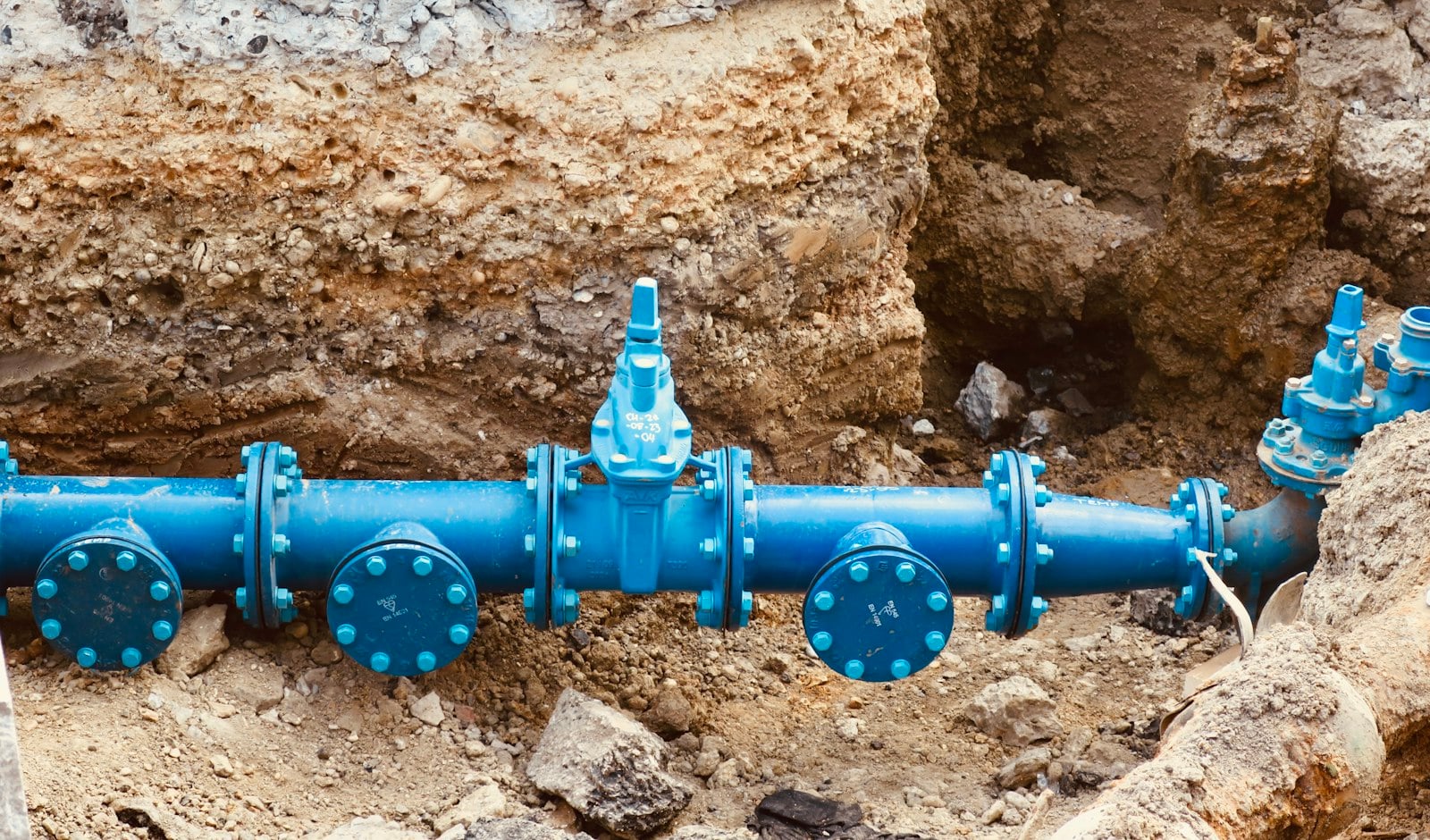
Not every visit needs every step below. San Marcos Emergency Plumber separates the emergency repair from anything optional and shows both on the quote.
The meter is read with the house isolated, the shutoff at the curb is located and the buried route is traced. Knowing where the pipe actually runs matters as much as knowing that it leaks.
Pressure testing and listening equipment narrow a long run down to a short section, so the ground is opened in one place instead of being trenched end to end on a guess.
A single break in sound pipe can be cut out and repaired. A run that has failed more than once, or old pipe in poor condition, is usually better replaced along its length or pulled through on a fresh route.
Many older properties have a main shutoff that no longer closes fully. Replacing it while the line is already open means the next emergency takes seconds instead of a trip to the curb.
The new section is tested under pressure before the ground goes back, then the lines are flushed so loose grit does not end up in faucet cartridges, fill valves and shower mixers.
The trench is backfilled and compacted and the work area is left tidy. Anything that will settle over the next few weeks is pointed out to you before the technician leaves.
In most Texas cities the utility maintains the main in the street up to and including the meter, and everything from the meter to the house belongs to the property owner. Your water provider can confirm where that line falls for your address, and it is worth knowing before a repair is scheduled rather than during one.
Ground conditions decide a lot here. East of I-35 the clay swells and shrinks with the weather and slowly works at buried joints, while west toward the Hill Country the same trench runs through limestone and caliche that is slow to open. That is why locating the break precisely is worth the hour it takes: opening rock twice costs far more than opening it once. On acreage and on well properties the run from the pressure tank to the house can be very long, and San Marcos Emergency Plumber works on the house side of that system rather than on the well equipment itself.
If the line has already split and water is running, start with burst pipe repair. If you are not yet sure where the water is going, leak detection comes first, and a warm patch indoors usually points to slab leak repair instead. Properties around the reservoir often have unusually long supply runs, which is covered on the Canyon Lake plumbing page, and how a service call works explains the visit itself.
The length of the run, how deep it sits, what is on top of it and what the ground is made of. A break in open lawn is straightforward; the same break under a driveway, a patio or shallow rock is not. San Marcos Emergency Plumber locates the leak first and then quotes the repair, so the price reflects the actual job rather than a worst case.
As a rule the provider looks after the main and the meter, and the owner looks after the line from the meter to the house. Call your water provider to confirm for your address before work is booked. If the water is surfacing on the street side of the meter box, report it to them first.
Often, yes. A new line can be pulled through on a fresh route with a pit at each end, which leaves lawns, beds and paving mostly intact. Whether that works at your property depends on the route, the depth and what is buried nearby, and the technician will tell you on site which method suits it.
Not long. A small leak washes soil away from around the pipe, which lets it move and break open, and it can soften ground near the slab. If the leak cannot be repaired today, ask about closing the shutoff between uses. The slab leak warning signs guide covers what to watch for indoors in the meantime.
Tell us what the meter is doing and where the wet ground is, and we will plan the visit around it.